The Role of Steel Reinforcement in Commercial Concrete
In commercial concrete construction, strength isn’t just a goal — it’s a necessity. Concrete is naturally strong in compression, but it has a weakness: tension. That’s where steel reinforcement rebar steps in. Rebar transforms standard concrete into reinforced concrete, enabling it to resist cracking, flexing, and failure under stress.
For commercial concrete contractors, knowing when and how to use rebar is key to delivering long-lasting, high-performance results.
Whether it’s an expansive parking lot, a loading dock, or a slab poured over challenging terrain, proper reinforcement separates dependable builds from those destined for early repair.
Skilled concrete contractors understand that strategic rebar placement not only strengthens the structure but also reduces maintenance costs over time. This attention to detail is essential for meeting both performance standards and client expectations.

Large Concrete Slabs & High-Load Ground Installations
Many commercial projects involve large flatwork areas that demand steel reinforcement. Think of parking lots, drive lanes, equipment pads, and container yards. These ground-level slabs are exposed to heavy loads, repeated traffic, and natural ground movement. Over time, concrete alone will crack and fail under these stresses if it’s not reinforced properly.
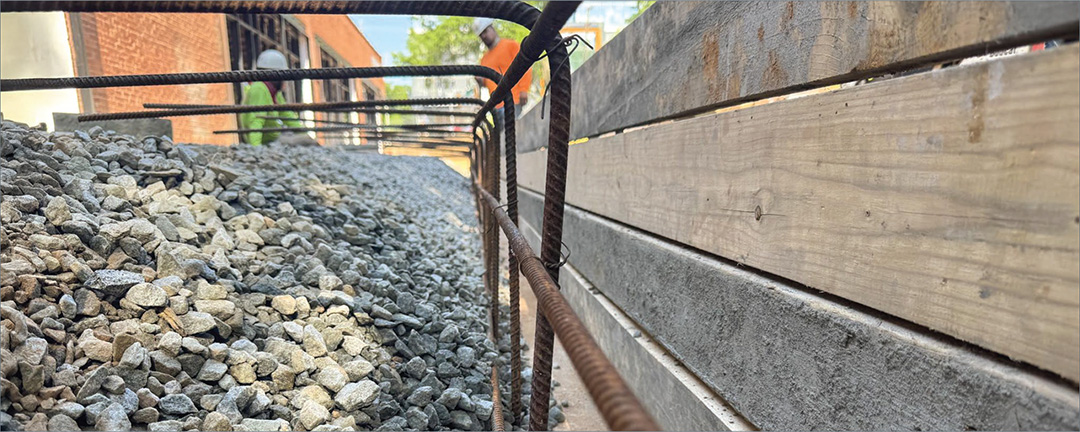
In these scenarios, rebar is used to increase tensile strength, maintain the slab’s integrity, and reduce the risk of costly repairs. Commercial concrete contractors use engineered rebar grids or mats to help slabs handle both static and dynamic loads — especially important when working over uneven subgrades, expansive soils, or weak native ground.
Heavy Traffic and Equipment Zones
Areas that support industrial or commercial vehicle traffic are under constant assault. Forklifts, semi-trucks, delivery vans, and construction equipment all place tremendous stress on concrete surfaces. In distribution centers, freight terminals, and transit facilities, slabs must withstand thousands of vehicle passes and extreme point loads.
This is where steel reinforcement rebar is absolutely essential. It helps distribute weight evenly across the slab and prevents cracking or deformation under wheel pressure. Without reinforcement, even a minor shift in load distribution can result in cracks, joint failure, or surface spalling — all of which compromise safety and drive up maintenance costs.
Harsh Environmental Exposure
Concrete may seem indestructible. However, climate and soil conditions like those in central North Carolina can put any slab to the test. With frequent freeze-thaw cycles in winter, hot, humid summers, and heavy seasonal rainfall, concrete must be built to endure a wide range of stressors. Add in the region’s expansive clay soils and occasional flooding, and you’ve got an environment where steel rebar can provide critical protection.
Rebar helps keep concrete slabs intact during cycles of expansion and contraction, resisting the tensile forces that develop when temperatures swing or moisture content in the soil fluctuates. Whether it’s a commercial driveway, equipment pad, or site paving, rebar provides the internal strength that allows the slab to flex without falling apart. For commercial concrete projects across the central North Carolina region, reinforced concrete is a proven way to maximize durability, minimize cracking, and extend the life of the installation.
Rebar Isn’t Always Necessary
While steel rebar provides essential reinforcement in many commercial applications, it’s not always a requirement. For light-duty concrete installations — such as sidewalks, curbs, small pads, or non-load-bearing walkways — proper thickness, subgrade preparation, and control joint placement may be sufficient to ensure durability without the need for rebar. In these cases, concrete is still engineered to perform, but the structural demands are low enough that reinforcement isn’t always justified. Commercial concrete contractors may also use alternatives like fiber-reinforced concrete to help manage cracking and maintain integrity. The key is understanding the project’s use, environment, and expected traffic so the solution is both cost-effective and reliable — without overbuilding where it isn’t needed.
Choosing the Right Commercial Concrete Contractor Matters
In any reinforced concrete project, the quality of your contractor is just as important as the materials. At L&L Concrete, we’ve been delivering high-quality commercial concrete solutions since 1995, and we know what it takes to get the job done right. With decades of hands-on experience, our crews understand the critical role steel rebar plays in long-term performance.
From concrete flatwork to high-load commercial applications, L&L Concrete brings unmatched attention to detail and a commitment to craftsmanship that sets us apart. When you partner with L&L Concrete, you’re choosing a contractor with a proven track record of strength, reliability, and professionalism. That’s why we’re proud to be Raleigh’s go-to concrete contractor — trusted by builders, developers, and business owners for nearly 30 years.
Reinforcement That Works as Hard as You Do
Steel rebar might be hidden inside the slab, but its impact is impossible to miss. From heavy-use industrial pads to long stretches of paved access roads, reinforcement is what keeps commercial concrete performing under pressure — day after day, year after year.
If you’re planning a concrete project for your business or facility, don’t overlook the importance of proper reinforcement. Partner with a commercial concrete contractor who understands the science, respects the standards, and builds with purpose. Because when it comes to concrete, strength is more than how it looks — it’s how it lasts.